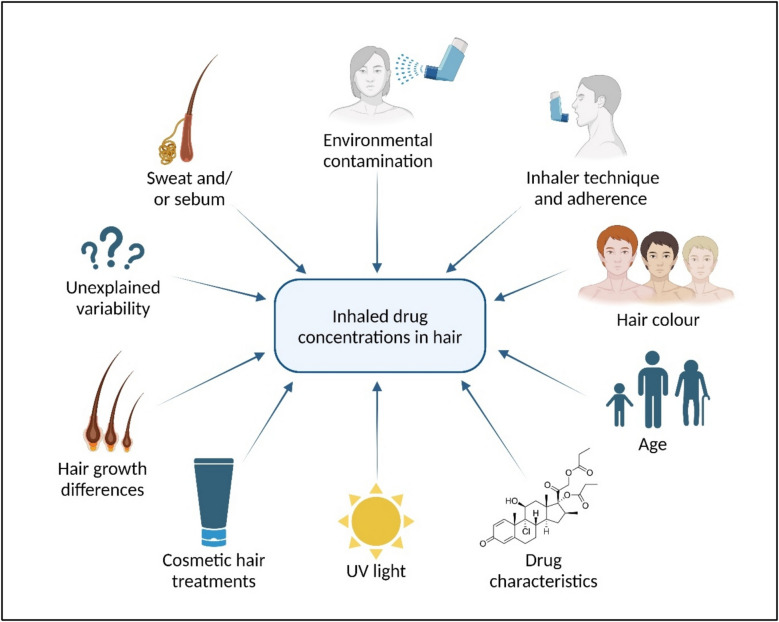
MAECON has recently developed a novel analysis to detect exposure to drugs in human scalp hair. Given hair vessels are connected with the systemic blood circulation and hair grows around 1 cm per month, each centimeter of hair measured from the scalp, represents the average exposure. This way, using a non-invasive measurement, we are able to “look back” for around 3 months to have an objective confirmation of average long-term drug intake (as a surrogate for adherence). This has advantages over single blood or urine samples, that typically provide information on last 1-2 days exposure only and does not require frequent burdensome sampling.
While we have developed hair analyses for several drugs (e.g. tacrolimus, cocaine), one of the first use cases we have described and validated are inhaled respiratory medicines. Amongst other, we looked into advantages and disadvantages but also compared this novel method between hair segments and versus digital inhaler data. Our findings have been published in peer-reviewed journals. Note that we will continue working on this promising method in order to better understand variability, e.g. caused by hair color, UV exposure, use of sampoos/coloring etc.
For more information see our latest publications:
Cuperus LJA, Ahmed W, In ‘t Veen JCCM, Kerstjens HAM, Zijp TR, Stevens J, Wessels AMA, Touw DJ, van Boven JFM. Hair analysis for monitoring adherence to inhaled respiratory medications: possibilities and limitations. Eur J Clin Pharmacol. 2025;81(12):1745-1758
Sportel E, Wagelaar K, Brusse-Keizer M, van der Palen J, van Veen H, Wessels M, van Boven J, Touw D, Movig K. Stability of formoterol concentration in scalp hair of patients using maintenance formoterol therapy for asthma or COPD (INCTFISH). Front Pharmacol. 2025;16:1693712